Archive for the ‘Property Taxation’ Category

Taxation When Doing Lease Options Deals

January 27th, 2010
1) What are the major taxes that investors should be concerned with when dealing with lease option transactions?
Well the largest of them is the possible liability of Inheritance Tax (IHT) and Capital Gains Tax (CGT).  Investors will also need to declare any income tax they are in receipt of in much the same way as with any other buy to let property.  Note you will be able to offset this latter tax against certain business expenses.
2) How do they apply to lease options?
When it comes to the option enforcement point investors should be aware that both CGT and IHT will apply – so even if you are planning to flip the lease option, be sure to account for the tax liability.  As many readers would know, however, investors have set allowance of £325,000 for IHT and £10,100 CGT (note that these have been changing year in year out recently).  If you are doing lease options, then ensure you are doing it in the correct way to mitigate any potential tax liability.
3) Can taxes be offset in any way?
As mentioned above, income tax can be offset.  Having spoken to the Inland Revenue about this issue, my understanding is that CGT and IHT taxes cannot be offset in any way due to the complexity of undertaking lease option agreements.
4) Are there any tax benefits in undertaking lease options?
No significant tax benefits, though each case should be viewed on merit before giving any specific advice, as with all of these cases, there is unfortunately no generic answer.  Drop me a line and I will be able to outline the current, medium term and long term implications on a per deal basis (contact details are below).
5) Should the Inland Revenue be informed prior to do any kind of lease option transaction?
No, there is no necessity of doing this
6) Should investors file their tax returns in the same way?
Yes, everything is done in the same way as they would on their standard tax return.
7) Should the optioner (grantor) be aware of any tax implications?
No, none that can be noted at present (subject to change by the HMRC).
8) If, for example, if the option is exercised after the 5 year PPR period granted to homeowners – would they be subject to CGT (if they have not lived in the property)?
Yes, there would be the liability to CGT but the usual allowances would kick at the rate defined by the HMRC each year
For any lease option transaction, it is highly advisable to seek professional advise via a tax specialist or an accountant with the relevant knowledge on the subject.  The answers above could be subject to changes, so we would also recommend investors be vigilant when doing business.  For independent and objective advice, Simon can be contacted via email at thetaxinsider@yahoo.com orWith With

With many property investors incorporating lease options into their buying strategy, PS Investor Services have interviewed tax expert and IFA, Simon Goody, on the necessary implications when conducting these kinds of transactions.  Please see the short interview below:

1) What are the major taxes that investors should be concerned with when dealing with lease option transactions?  Well, the largest of them are the possible liabilities of Inheritance Tax (IHT) and Capital Gains Tax (CGT).  Investors will also need to declare any income tax they are in receipt of in much the same way as with any other buy to let property.  Note you will be able to offset this latter tax against certain business expenses.

2) How do they apply to lease options?  When it comes to the option enforcement point investors should be aware that both CGT and IHT will apply – so even if you are planning to flip the lease option, be sure to account for the tax liability.  As many readers would know, however, investors have set allowances of £325,000 for IHT and £10,100 CGT (note that these have been changing year in year out recently and should be monitored).  If you are doing lease options, then ensure you are doing it in the correct way to mitigate any potential tax liability.

3) Can taxes be offset in any way? As mentioned above, income tax can be offset. Having spoken to the Inland Revenue about this issue, my understanding is that CGT and IHT taxes cannot be offset in any way due to the complexity of undertaking lease option agreements.

4) Are there any tax benefits in undertaking lease options? No significant tax benefits, though each case should be viewed on merit before giving any specific advice – as with all of these cases, there is unfortunately no generic answer.  Drop me a line and I will be able to outline the current, medium term and long term implications on a per deal basis (contact details are below).

5) Should the Inland Revenue be informed prior to do any kind of lease option transaction? No, there is no necessity of doing this.

6) Should investors file their tax returns in the same way? Yes, everything is done in the same way as they would on their standard tax return.

7) Should the optioner (grantor) be aware of any tax implications?  No, none that can be noted at present (subject to change by the HMRC).

8)If, for example, if the option is exercised after the 5 year PPR period granted to homeowners – would they be subject to CGT (if they have not lived in the property)? Yes, there would be the liability to CGT but the usual allowances would kick at the rate defined by the HMRC each year

For any lease option transaction, it is highly advisable to seek professional advise via a tax specialist or an accountant with the relevant knowledge on the subject.  The answers above could be subject to changes, so we would also recommend investors be vigilant when doing business.  For independent and objective advice, Simon can be contacted via email at thetaxinsider@yahoo.com or calling 07957-1891450845-226-0728.  Please also see his websites: My Money Mentor and Advice Matters.

Share and Enjoy:
  • Digg
  • del.icio.us
  • Facebook
  • Google Bookmarks
  • email
  • LinkedIn
  • Live
  • MSN Reporter
  • PDF
  • RSS
  • Twitter
  • Yahoo! Bookmarks
  • Yahoo! Buzz
  • Reddit
  • StumbleUpon

Property Investor / Landlord Tax Management

January 20th, 2010
You will be aware that deadline for filing you compulsory tax returns is 31st January.  Please see a short interview with accountant and taxation expert Arthur Kemp on the various aspects of maintaining good books; completing the returns; handling procedures if you have a mixture of property investments and several other hints, tips and useful information.
1) What are the most important factors that need to be taken into account when managing your property tax affairs?  By far, the most important factor is to have excellent record keeping. Keep all your receipts, statements, bills, utility records, cheque stubs etc. As well as keeping these items, I recommend to have a weekly or monthly income & expenditure list – which can be done within a simple Excel spreadsheet.  Have two columns: one for and the other for expenditure – with brief descriptions of the item such as: “June rental income, 123 North St.” or “Council Tax September 345 Smith St.”  Remember that even if this information is not used for the tax return yourself, your accountant is likely to charge you less (as you are saving them time by maintaining good records). Personally, I find the key is to regularly update the data. Leaving it to the end of the tax year, always results in two weeks of mayhem!
2) Is it a process that a landlord/lady do themselves?  If you feel that you can do your taxes on your own use the standard manual way with the actual physical forms, or you can do them online. Doing them online can be a very quick and easy method especially if you use tax software which is readily available.   Property owners should be aware that the area of taxation is complex and changes with every Fiscal year. There is a risk that landlords who undertake submission of Self Assessment tax returns may miss niche tax reliefs, such as Capital Allowances on multi-let properties.
3) What is the easiest and most efficient way to do it? The most cost-effective way is to employ a professional. Accountants are highly trained to ensure that clients receive the most up to date tax advice. They also ensure that you are aware and take advantage of any reliefs which you may be entitled to and that all transactions adhere to generally accepted accounting practices.
4) At what sort of size portfolio would you recommend the use of an accountant? I would recommend an accountant for even 1 property. Utilising the correct accounting treatment of certain property transactions could save you thousands, and that would be worth the fee alone.
5) If you had a mixture of property investments (for example standard buy to lets, HMOs, lease optioned properties) – what would be your advice? It is important, I feel, to have an accountant who specialises in property related transactions. With lease options, for example, there are issues of ownership, how to treat Capital Gains Taxation, rental income, disposal of assets etc – all of which can be dealt with by a competent accountant with specific property transaction expertise.
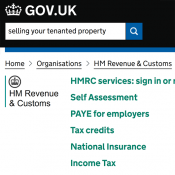
6) Where can people go online for advice as to best complete their return? The HMRC’s website has all of the information which anyone may need. It is, in my opinion, not the easiest to navigate, but if you persist, it’s all there:
HMRC Website for Tax Advice
However, for Capital Allowances tax relief, which applies to multi-let property owners, you can visit
HMO Tax
7) Do you have any potential tax-saving tips that readers should be made aware of when filing their return?
All Multilet & HMO owners should ensure that Plant & Machinery Capital Allowances are claimed on the qualifying assets within the communal areas of the property. Please also consider these tips:
Check your tax code – make sure that yours is right in order to avoid paying too much tax;
Investigate rebates – any of those eligible for a tax rebate are unaware of their eligibility. If you have been placed on the ‘Emergency Rate’ at any period there is a high chance that HMRC owes you money;
Use all of your allowances – most individuals will receive their personal allowance for income tax and National Insurance automatically. However, there are numerous other allowances to which you may be entitled but which you may not be claiming. For example, mileage allowances for business use of your car can reduce your tax bill significantly;
Claim Tax Credits  –  the Tax Credit system can sometimes appear rather opaque, with many people failing to understand what they are entitled to. HMRC currently offer around £3.7 billion of Tax Credits, much of which goes unclaimed;
Plan for IHT – Inheritance Tax is one of the most despised and potentially most expensive forms of taxation. The tiny number of individuals who make any effort to reduce their IHT burden is therefore surprising.  Simple steps like making a will can drastically reduce an IHT bill, and require very little work;
Put non-earners allowances to work – if your spouse does not earn, or earns less than their personal allowance, you should consider moving any income generating assets into their ownership. Regardless of whether or they are earning, they will still qualify for their personal allowance. Making use of this could save you thousands every year;
Choose tax efficient savings – savings schemes are an excellent way to reduce your tax bill, and build a nest egg for the future. Simple steps like using up your ISA allowance can cut significant amounts off your tax liabilities. You may also wish to consider a company share scheme, which tend to be highly tax efficient and may involve discount shares;
Sort your Self Assessment – if you are a self assessment taxpayer, completing your return early can result in big savings. In the first instance, if you get your return in by the end of October HMRC will calculate your tax for you. However, if you miss the 31st January deadline, you will automatically be fined £100.
Use your pension – pension contributions are exempt from tax. This means that you can reduce your income tax bill by putting extra cash into your pension. The money will be deducted from your pre-tax income.
Hire an accountant – if your tax affairs are in any way complex, hiring a good accountant is likely to save you money. Their retainer fees can seem expensive, but a knowledgeable tax expert will pay for themselves immediately.

You will be aware that deadline for filing you compulsory tax returns is 31st January.  Please see a short interview with accountant and taxation expert Arthur Kemp on the various aspects of maintaining good books; completing the returns; handling procedures if you have a mixture of property investments and several other hints, tips and useful information.

1) What are the most important factors that need to be taken into account when managing your property tax affairs? By far, the most important factor is to have excellent record keeping. Keep all your receipts, statements, bills, utility records, cheque stubs etc. As well as keeping these items, I recommend to have a weekly or monthly income & expenditure list – which can be done within a simple Excel spreadsheet. Have two columns with brief descriptions of the item such as: “June rental income, 123 North St.” or “Council Tax September, 345 Smith St.”  Remember that even if this information is not used for the tax return yourself, your accountant is likely to charge you less (as you are saving them time by maintaining good records). Personally, I find the key is to regularly update the data. Leaving it to the end of the tax year, always results in two weeks of mayhem!

2) Is it a process that a landlord/lady can do themselves? If you feel that you can do your taxes on your own use the standard manual way with the actual physical forms, or you can do them online. Doing them online can be a very quick and easy method especially if you use tax software which is readily available.   Property owners should be aware that the area of taxation is complex and changes with every Fiscal year. There is a risk that landlords who undertake submission of Self Assessment tax returns may miss niche tax reliefs, such as Capital Allowances on multi-let properties.

3) What is the easiest and most efficient way to do it? The most cost-effective way is to employ a professional. Accountants are highly trained to ensure that clients receive the most up to date tax advice. They also ensure that you are aware and take advantage of any reliefs which you may be entitled to and that all transactions adhere to generally accepted accounting practices.

4) At what sort of size portfolio would you recommend the use of an accountant? I would recommend an accountant for even 1 property. Utilising the correct accounting treatment of certain property transactions could save you thousands, and that would be worth the fee alone.

5) If you had a mixture of property investments (for example standard buy to lets, HMOs, lease optioned properties) – what would be your advice? It is important, I feel, to have an accountant who specialises in property related transactions. With lease options, for example, there are issues of ownership, how to treat Capital Gains Taxation, rental income, disposal of assets etc – all of which can be dealt with by a competent accountant with specific property transaction expertise.

6) Where can people go online for advice as to best complete their return? The HMRC’s website has all of the information which anyone may need. It is, in my opinion, not the easiest to navigate, but if you persist, it’s all there:

HMRC Website for Tax Advice

However, for Capital Allowances tax relief, which applies to multi-let property owners, you can visit

HMO Tax

7) Do you have any potential tax-saving tips that readers should be made aware of when filing their return? All Multilet & HMO owners should ensure that Plant & Machinery Capital Allowances are claimed on the qualifying assets within the communal areas of the property. Please also consider these tips:

  • Check your tax code – make sure that yours is right in order to avoid paying too much tax;
  • Investigate rebates – any of those eligible for a tax rebate are unaware of their eligibility. If you have been placed on the ‘Emergency Rate’ at any period there is a high chance that HMRC owes you money;
  • Use all of your allowances – most individuals will receive their personal allowance for income tax and National Insurance automatically. However, there are numerous other allowances to which you may be entitled but which you may not be claiming. For example, mileage allowances for business use of your car can reduce your tax bill significantly;
  • Claim Tax Credits  –  the Tax Credit system can sometimes appear rather opaque, with many people failing to understand what they are entitled to. HMRC currently offer around £3.7 billion of Tax Credits, much of which goes unclaimed;
  • Plan for IHT – Inheritance Tax is one of the most despised and potentially most expensive forms of taxation. The tiny number of individuals who make any effort to reduce their IHT burden is therefore surprising.  Simple steps like making a will can drastically reduce an IHT bill, and require very little work;
  • Put non-earners allowances to work – if your spouse does not earn, or earns less than their personal allowance, you should consider moving any income generating assets into their ownership. Regardless of whether or they are earning, they will still qualify for their personal allowance. Making use of this could save you thousands every year;
  • Choose tax efficient savings – savings schemes are an excellent way to reduce your tax bill, and build a nest egg for the future. Simple steps like using up your ISA allowance can cut significant amounts off your tax liabilities. You may also wish to consider a company share scheme, which tend to be highly tax efficient and may involve discount shares;
  • Sort your Self Assessment – if you are a self assessment taxpayer, completing your return early can result in big savings. In the first instance, if you get your return in by the end of October HMRC will calculate your tax for you. However, if you miss the 31st January deadline, you will automatically be fined £100.
  • Use your pension – pension contributions are exempt from tax. This means that you can reduce your income tax bill by putting extra cash into your pension. The money will be deducted from your pre-tax income.
  • Hire an accountant – if your tax affairs are in any way complex, hiring a good accountant is likely to save you money. Their retainer fees can seem expensive, but a knowledgeable tax expert will pay for themselves immediately.

Arthur Kemp – Exact Business Services Ltd – HMO Tax Consultants – www.hmotax.co.uk – T: 01733 248 706 – M: 07595 398 781

Share and Enjoy:
  • Digg
  • del.icio.us
  • Facebook
  • Google Bookmarks
  • email
  • LinkedIn
  • Live
  • MSN Reporter
  • PDF
  • RSS
  • Twitter
  • Yahoo! Bookmarks
  • Yahoo! Buzz
  • Reddit
  • StumbleUpon

Interview with HMO Tax Expert

November 18th, 2009

Please see our interview with House of Multiple Occupation Tax Expert, Arthur Kemp, whose full contact details can be found at the bottom of the post:

1) First off, can you give our readers a bit of an insight into your background?
An accountant by profession: I held the position of UK Accounting Manager within a large international commercial organisation, with a multi billion pound portfolio and part of my role was to maximize tax saving.  Since finding PETPIG (Peterborough Property Investment Group) earlier this year, I have taken my tax knowledge and applied it to the HMO sector (I prefer the personal contact with real people).  Exact Business Services Ltd specialise in Capital Allowances and reducing or claiming back clients tax.

2) More and more investors have looked into taking on HMO properties – largely because of the significant cash-flow benefits they offer. What are the major differences in tax implications when compared to single let property ownership?
Largely the implications are the same – however, for a multi-let accommodation, there will be more costs incurred due to meeting fire regulations, licensing etc, but more income to be taxed against also.  HMO owners can claim Capital Allowances, whereas these cannot be claimed for single let unit. Even if the property was a HMO residence historically, you can claim.

3) If you owned a portfolio of HMO properties what would be the best way to manage your tax affairs (and ensure you are not overpaying!)?
I can’t stress enough the importance of good record management.  Having detailed files on all of your income and outgoings is essential if your tax advisor is to maximize your position. Having full visibility of your affairs enables advisors to take advantage of the most recent legislation. The legislation changes every year, so one should seek the most up to date advice, by engaging an expert.  We offer a free consultation by calling Exact Business Services Ltd on 01733 248 706, or 07595 398 781.

4) What would be the tax benefit of owning your HMO portfolio as a company – if any?
To answer this question there are many different factors to consider but the one major factor that is likely to attract property owners is the tax saving that can be made by trading through a Limited Company as opposed to becoming self employed.  The savings depend on profit and individual circumstances, but in general, one would pay less tax as a company.  There are some points to address:

  • Accountancy fees will increase. You can add on around another £500 a year minimum in additional costs;
  • More regulation – as well as the Inland Revenue and the VAT office you will now have to deal with Companies House (your accountant will take care of this for you usually) and face stiffer penalties for missing any deadlines;
  • Your accounts will be visible by the general public (and of course your clients/customers). You will usually submit an abbreviated set of accounts to Companies House which does keep to a minimum the amount of information which is available for public record;
  • The “Limited” part of a Limited Company means that the Company’s liability to any creditor is limited to the assets (cash, cars, equipment etc) that are in the Company. What this means is that should you get into financial difficulty with the Company, your personal assets (your house is usually the main one) will be safe.  The only exceptions to this are if you have given any personal guarantees for any lending the Company has (the bank will usually insist on this) or if you have taken more out of the Company than you were entitled to. This basically means that you have to keep enough money aside within the Company for your tax and VAT;
  • Public and customer perception is that a Ltd Company is a more substantial entity than just being a sole trader. You may find that this leads to the chance of bigger assignments or higher rates

5) As a HMO property owner you are, by and large, entirely responsible for repairs, maintenance etc. – what ways are there to offset these expenses against your tax liability?
Firstly, keep records of absolutely everything and remember that costs incurred purely for the business can be used to offset taxable income.  As well as these, HMRC have a number of allowances which are essentially business expenses. One of these, Capital Allowances, can be used against any stream of income and is not restricted to your property profits.  Claiming Capital Allowances is our speciality, and these can be used against ALL income – not just property related ones.

6) What would be classed as a ‘HMO property expense’ in the eyes of the HMRC?
Not all business expenses are tax deductible, so it’s important to make sure you claim all that you can.
In general, if something you buy for your business is not a capital asset, you deduct its full cost when working out your taxable profits. This means you get immediate tax relief for the full amount.
Here are some key expenses you can claim and some you can’t:
Expenses you can claim…

  • Salaries and benefits:- employees’ wages and redundancy payments, Employers’ National Insurance; insurance and pension benefits for employees; Any employee childcare provision you make; the cost of training employees.
  • Dedicated business premises:- heating, lighting, cleaning, water rates, rent, business rates, general maintenance.
  • If you work from home a proportion of costs are tax deductible such as:- lighting, heating, cleaning, insurance, mortgage interest, council tax, water rates;
  • General maintenance:- the proportion should be based on the floor area or number of rooms used for business and the proportion of the time it is used for business (if it is not for exclusive use);
  • Travel and accommodation:- running costs of a car or other vehicle – petrol, car tax, insurance, repairs and servicing. If you also use the car privately, you can claim only a proportion – usually the ratio of your business mileage to your total mileage (keep a log of business mileage for a representative period as well as all bills);
  • Travel and accommodation on business trips and between different places of work can be claimed as well.

…and expenses you can’t

  • Salaries and benefits:- if you are self-employed you cannot claim your own wages, salary or other money drawn from the business. Your own National Insurance contributions and income tax; your own pension costs, life insurance and health insurance.
  • Premises:- You cannot claim the initial cost of buildings, alterations and improvements (such as extensions to house your business) – such work may qualify for annual investment allowance or capital allowances.
  • A proportion of bills relating to private use of your home;
  • Travel and accommodation:- travel between home and workplace, the cost of buying a vehicle (although this may qualify for capital allowances), meals (except a reasonable amount for breakfast and evening meals on overnight trips – there is no definition of ‘reasonable’ – you must keep receipts and may need to argue your case).  If you can divide an expense between business and personal cost (car running costs between business and personal travel, say), the business proportion is deductible. If the nature of the expense means it cannot be divided (such as the cost of a transatlantic flight), then no deduction is allowed.

7) We noticed in one of your recent blog updates that you saved HMO landlord clients over £200,000 in tax this week using a little known tax relief mechanism – can you discuss this a little further?
CAPITAL ALLOWANCES: these are a little known tax relief which has been in place since 1878. Only last year it was confirmed as being applicable to the Plant & Machinery assets of communal areas within HMO properties, by the HMRC.  Around 20% of the purchase price of your property, subject to survey, can be set-off against any income stream you have.  For more information visit www.hmotax.co.uk

8)There are many investors currently placing lease options on properties and converting them into HMOs – are there any tax implications that they should be aware of?
We are currently researching and liaising with HMRC regarding eligibility to claim Capital Allowances. We need to establish a number of factors here, prior to preparing any claim. Presently, we are only offering services to Freehold and long term Leasehold property owners.

9) Lastly, can you provide readers with some information about the services you offer at ‘HMO Tax’?
We are a niche tax consultancy, which specialise in Capital Allowances Tax relief.  We pride ourselves on providing a personal, professional, no nonsense tax relief service for HMO landlords.  HMOs qualify for Capital Allowances, which has been around since 1878, and can be claimed against ANY income stream, not just your rental premises.  This service allows, typically 20% of the purchase price of a HMO property to be set-off against any forms of income, the owners receive. There is no time restriction on claiming, and these allowances can be used to reclaim tax paid in the past, or your current year’s liability, or against future taxes.

Arthur Kemp - Exact Business Services Ltd – HMO Tax Consultants – www.hmotax.co.uk – T: 01733 248 706 - M: 07595 398 781


Share and Enjoy:
  • Digg
  • del.icio.us
  • Facebook
  • Google Bookmarks
  • email
  • LinkedIn
  • Live
  • MSN Reporter
  • PDF
  • RSS
  • Twitter
  • Yahoo! Bookmarks
  • Yahoo! Buzz
  • Reddit
  • StumbleUpon

Tax Strategies for the Property Investor

April 23rd, 2009

Please click on the link to hear our tax stratergies interview with Simon Goody (Part 2). Simon Goody is an IFA, coach and mentor with over 20 years of experience.

In the discussion we go over a number of subjects including:
- How tax is actually voluntary – it’s all about how you set yourself up;
- Offsetting your Income Tax / credit card interest;
- Stamp Duty and Inheritance tax;
- What to look for in a good accountant;
- Tax Havens and ‘ring-fencing’ your assets

To get in touch with Simon directly, his contact details are below:
Simon Goody
E: advice.matters@yahoo.co.uk
T: 0845 226 0728
M: 07957 189 145
S: advice.matters

Please feel free to leave your comments below…

Share and Enjoy:
  • Digg
  • del.icio.us
  • Facebook
  • Google Bookmarks
  • email
  • LinkedIn
  • Live
  • MSN Reporter
  • PDF
  • RSS
  • Twitter
  • Yahoo! Bookmarks
  • Yahoo! Buzz
  • Reddit
  • StumbleUpon

New Tax Year 2009-2010

March 25th, 2009

You’ll probably be aware that the start of the new tax year is next
week (4th-6th April, it falls over a weekend – day before and day
after). For property investors and landlords this means that you
should ensure that you use all the allowances you can BEFORE the
New Tax Year.

Remember ISA’s, Pensions, Inheritance Tax, Capital Gains Tax,
Capital allowances and expenses can be offset against income tax.
Do not leave them to the last minute or you may not get in on time.

Watch this space for an exclusive interview with Simon Goody -
IFA and Tax Specialist – we’ll be talking about the best way both
newbie and novice investors can future-proof their property
businesses from a tax perspective.

Share and Enjoy:
  • Digg
  • del.icio.us
  • Facebook
  • Google Bookmarks
  • email
  • LinkedIn
  • Live
  • MSN Reporter
  • PDF
  • RSS
  • Twitter
  • Yahoo! Bookmarks
  • Yahoo! Buzz
  • Reddit
  • StumbleUpon